

The POT He always has his sights set on outer space, but there are times when his technologies can be applied on Earth. In fact, some can reach such everyday aspects as recharging an electric car, which seems to be the norm in the coming years. There is the widespread complaint about the recharging infrastructure and the few number of public points, but it is also said that charging times are still high. That could be solved with an interesting system that focuses on cooling.
In space is key maintain optimal temperature of each device to keep everything running smoothly. So NASA has always been working on various thermal control technologies and one of them is perfectly applicable in the engine world. Get the name of Flow Boiling and Condensation Experiment (FBCE), which we could translate as “flow boiling and condensation experiment” and is used by astronauts to experiment in microgravity situations on the International Space Station.
And what does that have to do with recharging electric cars? Well, after a year of testing it in space, they have discovered that they could install this system in car charging systems to improve its thermal efficiency. When electric current passes through any conductor it generates heat, which increases the greater the current. The cables for fast chargers are thicker and heavier due to precisely that, the need to control their temperature so that it does not reach certain limits.
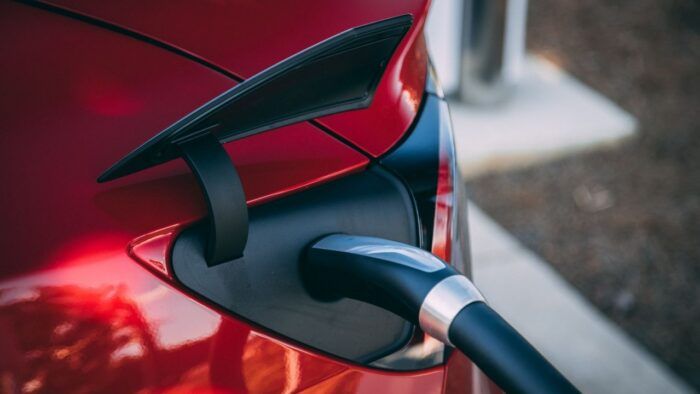
to have one full charge in five minutes and not in half an hour as is being contemplated now in the best of cases, a current of 1,400 amps would be necessary, practically triple that reached by current chargers. That would generate a lot of heat and a better method of temperature control would be needed. And that’s where the “flow boiling” that NASA has worked with comes into play. With a dielectric liquid coolant (non-conductive of electricity) that is pumped through the charging cable, where it captures the heat generated by the current conductor.
The first tests have allowed them to reach deliver up to 4.6 times the current of the fastest electric vehicle chargers available on the market today while removing up to 24.22 kW of heat. In fact, with the Purdue charging cable you could deliver up to 2,400 ampsmuch more than the 1,400 that we mentioned to get that precious charge in five minutes… In short, an improvement that could be really interesting and that could mark a turning point in the electric car.