

Although electrification is going to be the absolute protagonist in the future of the automotive industry, there are still some manufacturers who want to extend the life of internal combustion engines. And one of the most feasible ways is through the Alternative fuels that are totally respectful with the environment. In fact, some Japanese brands have come together to investigate this case and creations like the Mazda 2 Bioa competition prototype that has a lot to say.
Its name means that it is a Mazda 2 (not derived from the Toyota Yaris) that moves thanks to a very special biodiesel. It is made from used cooking oil and microalgae fats, specifically from the Euglena genus. The alternative fuel is called Susteo and is produced from biomass from plants and microalgae, which makes it carbon neutral (vegetables absorb it). Another advantage is that it does not generate problems of food competition or deforestation (like the one made with corn) and on top of that could be used in production cars that circulate on the roads.
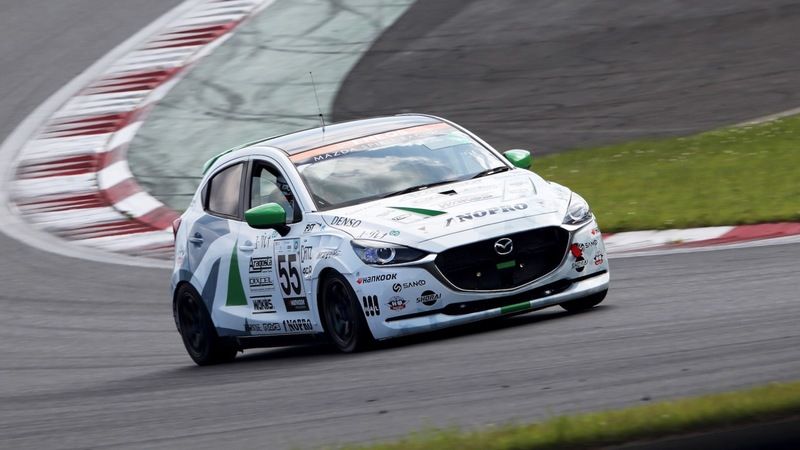
So much so that this new generation biodiesel is expected to start production in 2025 and may have other applications. In the Mazda 2 Bio it is used to move a strictly standard Skyactiv-D diesel engine, as it adapts well to aspects such as the fuel injection system. For the next season, the Hiroshima firm will develop a Mazda 3 that moves with this Susteo with a more powerful engine. At the moment, this prototype is competing in the ENEOS Super Taikyu Series, a Japanese competition. He does it in the category ST-Qreserved for non-approved special vehicles
The reason that Mazda invests in this type of competition and also in this alternative fuel is that they are betting on a multi-solution approach. This means that they want to offer different motorization options depending on the country or region, since the strict European regulations are not the same as those in the United States or in their native Japan. They currently already have the electric Mazda MX-30 and will maintain the goal of being carbon neutral by 2050, but they also want a smart transition that suits the needs of all the world.