

Battery research has different obstacles and bottlenecks, but there is one problem that stands out: the dendrites that appear in the cells and limit their useful life. Now, new MIT-led research claims to have discovered the root of the problem and shown how to reverse that degradation: the clever use of mechanical stress.
Dendrites are very thin metallic filaments, like tentacles, that develop on the electrode of a lithium battery as it cycles on charge and discharge. They meander into the electrolyte and cause problems such as short circuits, overheating and even fires. There are various approaches to prevent dendrite growth, but the authors of this new study have a radically different one.
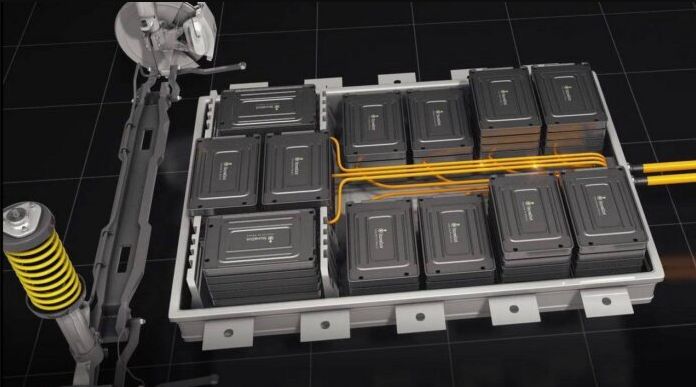
The scientists were experimenting with a solid-state battery when they observed something unexpected. As in a typical battery, lithium ions are transported between two electrodes as the device charges and discharges, passing them through the solid electrolyte. Although it had been made of a relatively hard material, the soft lithium could penetrate it as the ions moved between the electrodes on either side. Why? By changes in the volume of the electrodes as they accept and deposit lithium, which can cause problematic mechanical stress.
“To deposit this metal, there has to be a volume expansion because you’re adding new mass,” says MIT Professor Yet-Ming Chiang. “So, there is a volume increase on the side of the cell where the lithium is deposited. If microscopic flaws are present, it will build pressure on them that can cause cracks.” It is those cracks that then allow the dendrites to form.
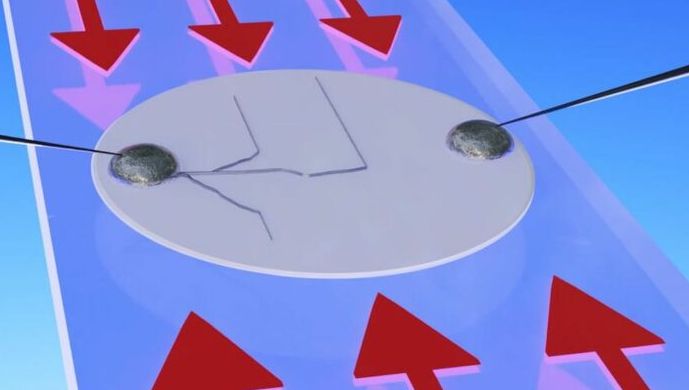
The researchers studied this process in a transparent, experimental electrolyte material. This helped a lot, as dendrites form within the opaque materials of a battery cell, hence the conflicting ideas about what causes them and how to stop them.
Once spotted, the research team demonstrated that mechanical stress can be applied to direct the growth of the dendrites, making them zigzag perfectly in line with the direction of the pressure. Mind you, they couldn’t stop them from forming entirely, but they can be sent along the electrode, instead of going straight into the electrolyte to wreak havoc.
All this has been seen in the laboratory, another thing is to achieve it in a battery in real life. To do this, MIT proposes incorporating materials with different thermal expansion properties to induce bending and, in turn, mechanical stress. The good thing is that wild pressures are not needed to control the growth of the dendrites, it is not difficult, according to the team, to implement them.
If they can design a battery in which dendrites grow harmlessly across the electrodes, it could speed up the creation of new solid-state lithium metal battery architectures. Using pure lithium as one of the anodes instead of graphite and copper, better power densities, lighter and safer could be offered by not using flammable liquid electrolytes. And that’s his next point: to create a functional battery with this form of mechanical stress driving the direction of dendrite formation.