

From time to time we hear strange terms that come from the DGT, as is the case of zombie cars. Now we have to talk about the squatting cars, who are now in the crosshairs of the administration for different reasons. The first thing is to explain that this term refers to those vehicles that have been abandoned in a parking lot or on public roads. The objective is that these cars are removed and scrapped so that they do not take up space or contaminate their surroundings.
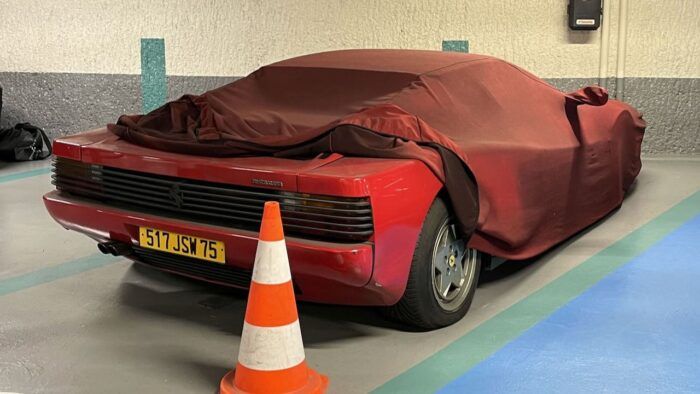
The latest DGT calculations say that around 50,000 vehicles are abandoned by their owners each year. Normally, they are old cars and practically useless, although there is everything. They also claim that another 6,000 vehicles reside in parking lots, workshops or warehouses because their owners cannot afford service or repair. It even transcends private venues, since there are another 20,000 abandoned cars in shopping centers, hotels, hospitals, airports and other private garages.
The fact is that this situation is so due to the complexity of the process to remove those vehicles abandoned. But the DGT has recently modified some rules precisely to put an end to these squatter cars in a simpler way. It is a reinterpretation of article 106 of the Law on Traffic, Circulation of Motor Vehicles and Road Safety; which is the one that says when a car is considered abandoned. Previously focused on public spaces, but now private venues are also included.
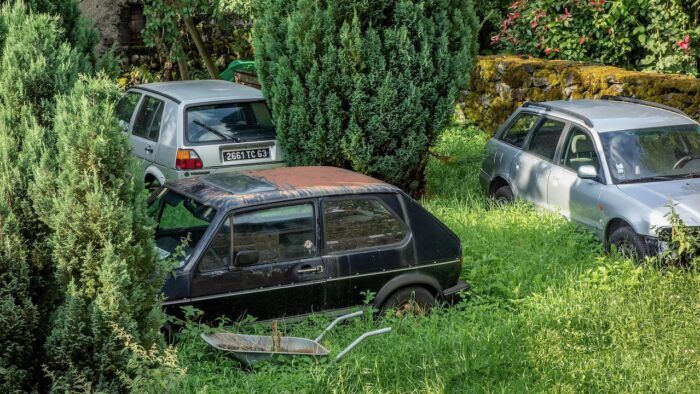
The cases in which the transfer of the vehicle to an Authorized Vehicle Treatment Center for its subsequent destruction and decontamination can be ordered are the following:
- When more than two months have elapsed since the vehicle was immobilized or removed from the public highway and deposited by the Administration and its owner had not made allegations.
- When it remains parked for a period of more than one month in the same place and presents damage that makes it impossible to move on its own or the license plates are missing.
- When a vehicle is collected as a result of its breakdown or accident in a private area, its owner has not removed it within two months.
Now also, in the third case it would suffice that “the owner or person in charge of the place or enclosure request authorization for the residual treatment of the vehicle to the Provincial Traffic Headquarters”. To do this, you would have to provide evidence that you have requested the owner of the vehicle the withdrawal of his enclosure. This would allow a shopping center or a community of neighbors to report that there is an abandoned vehicle inside and it would be easier for the authorities to remove it.
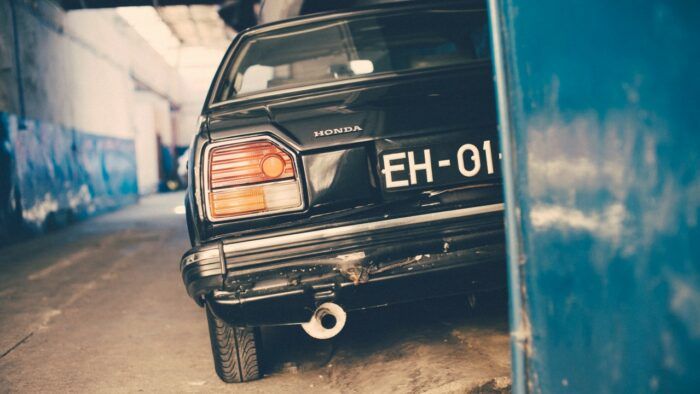
Of course, not all of them are going to be squatter cars like that all of a sudden. A process will also be carried out to verify that said vehicle is really abandoned. Before issuing the transfer order, a notification to the holder to warn him that he has a one month term to remove the vehicle. It is important that the person making the complaint provide documentation to confirm it. Photographs of the car on the premises, certificate of the administrator or minutes of the owners’ meeting will be requested to prove the time and/or notarial certificate of the circumstances and the actual location of the vehicle.
In addition, with the change in the regulations by the DGT, another assumption arises. In the event that the squatter car is abandoned, but does not show signs of damage, its use could be studied. I mean, it could be awarded to traffic services so that it has a second life instead of receiving residual treatment and being sent to scrap directly.