

The Renault Group looks to the future with the third phase of its Renaulution plan, an internal revolution with which things are going to change at all levels. In fact, the just announced news They include the launch of a new brand that focuses on electric models and also a large alliance with a well-known Chinese company to continue with combustion engines. The objective is to continue improving financially while adapting to the new era of mobility that awaits us in the coming years.
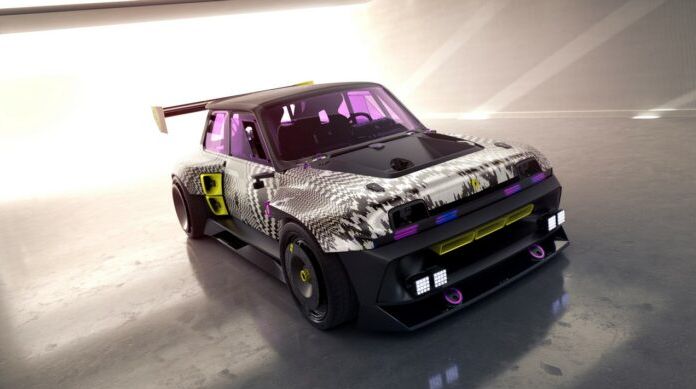
The first thing has been to create five strong and independent business units, each focused on a different aspect. The big news would be Ampere, which is a purely electrical brand and focused on software technology. It will have the help of some Renault partners such as Google and Qualcomm Technologies and will go public in the French stock market in the second half of 2023. By the end of the decade they will have six electric models, including some like the Renault 5 Electric and Renault 4 Electric, the Megane E-Tech or an electric Scenic. In total, they will produce one million units by 2031.
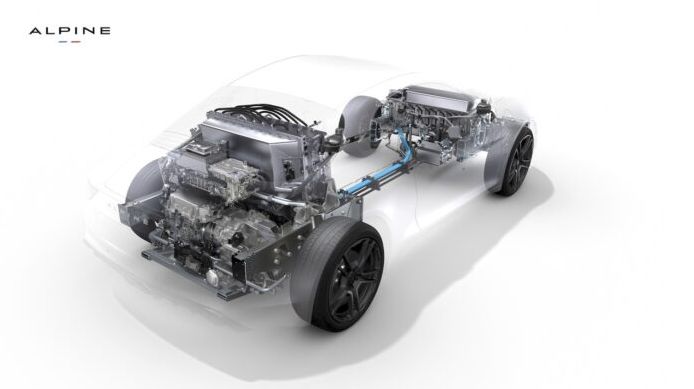
Secondly, will stay alpine as the aspirational brand of the group, although now maintaining its sustainability and making fully electric vehicles from 2026. In addition to that successor to the A110, they will have a B-segment sedan and a C-segment crossover, even later they will jump to higher segments to contribute to global expansion. The third business unit is Mobilizewhich wants to provide mobility, energy and data services thanks to being built around a large financial company such as Mobilize Financial Services (MFS).
The Future is Neutral is the first company to seek a 360º circular economy and with it Renault wants to offer closed-loop recycling solutions at each stage of a vehicle’s life. Currently around 50% of the value chain is covered, but by 2030 they want to reach 90%. The fifth unit is Power, the most traditional part dedicated to thermal and hybrid vehicles. To continue exploiting this technology, the French firm joins Geely in an entity owned 50% by each one in which they will make components and systems for electric and hybrid engines.
Their presence will be very generous, as they will meet with 17 factories to supply 130 markets, in addition to five R&D&i centers in Europe (Spain, Romania and Sweden), China and South America. With the help of Geely, they will be able to double their size and market coverage, achieving geographic expansion throughout North America and China. Dacia will remain very important, with the goal of reaching 15% operating margin by 2030 with two new models. They will also boost the business of light commercial vehicles through Hyvia with hydrogen and FlexEVan with electrification.