

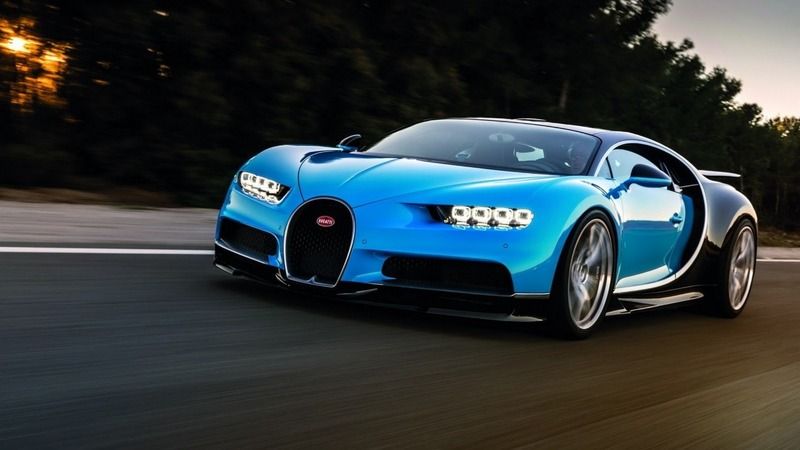
With 1,500 horsepower that can go up to 420 km / h, the Chiron is a complete beast.
The Bugatti Chiron is an engineering marvel. Despite its significant weight of 1,995 kilograms, it is a monster with 1,500 horsepower that can reach a maximum speed of 420 km / h. These are some of the amazing details that make the Chiron one of the most technologically advanced cars the world has ever seen.
The Chiron, worth approximately 9 million liras at the current exchange rate, is a very expensive engineering exercise that demonstrates the engineering and design capabilities of the Volkswagen Group at the highest level.
The Chiron is not a revolutionary car like its brother, but it is a vehicle that decorates every engineer’s dreams. It’s also the sole owner of the title of the most powerful car ever produced, at least until the Koenigsegg Regera is launched later this year.
Unlike many modern hybrid hypercars, Bugatti Automobiles S.A.S. President Wolfgang Dürheimer said during the presentation:
“Breaking boundaries and breaking new records is part of human nature – to run 100 meters faster than ever before, go further in space and explore new realms. This effort is also our driving force at Bugatti.”
This might sound like a fancy company executive trying to show off, but there’s no denying that they really make a car worth showing off.
The old Veyron was much more than just a car developed for the use of hip-hop stars, oligarchs and athletes, but it was used exactly that way. The main purpose of the car was to take the title of the fastest car in the world and to hold the records broken for a while.
Chiron sure has an amazing legacy, but will he be able to catch up with his brother? At least he will try. How Does? That’s it:
Engine
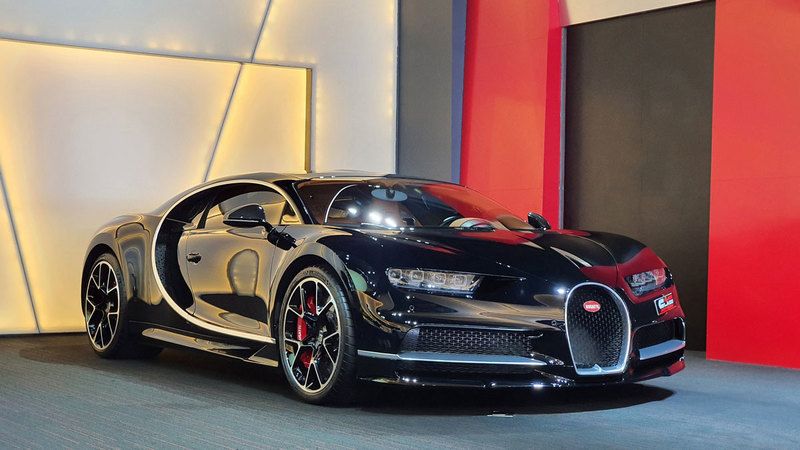
The Chiron’s engine is very similar to the old one found in the Veyron. Under the hood is the W16 and four turbochargers, which appear to have been compressed from two slim eight-liter V8s. The engine produces a staggering 1,190 horsepower and 1,270 lb-ft of torque.
Engineers needed to find a way to squeeze more air and fuel into the cylinders to get the Chiron to reach 1,500 horsepower—25 percent more power than the Veyron. They achieved this goal with new turbochargers for more air and an intercooling system called the new Charge Air Cooling, and upgraded fuel injectors to keep up with that airflow.
The new turbos are controlled by a two-stage system that replaces the parallel system on the Veyron. This probably means that instead of four cylinders each feeding a single turbine, a set of eight cylinders feeds the two turbos in series. This should give the car more power and better fuel economy.
To minimize turbo lag, at low engine speeds – that’s below 3,800 for the Chiron – the incoming air is compressed only by the first turbo. When the revs are above 3,800, the incoming air is compressed twice as much as it is sent to both turbos. This allows more air to enter the cylinders and increase volumetric efficiency.
When the pressure of the air entering the turbo increases and the temperature increase comes together, the gases entering the inside are not only intense, but also bring about possible problems. Bugatti says it has made changes to the charged air cooling system to fix this issue, but does not share details.
To deal with all the air being pushed into the cylinders, the Chiron comes with 32 Duplex fuel injectors to maintain an appropriate air/fuel ratio and draw fuel in a way that optimizes combustion efficiency.
The result: more than 60,000 liters of air enter the engine every minute with the Chiron’s turbocharger, producing 1,600 Nm of torque between 2,000 and 6,000 rpm.
Exhaust System
In addition to new turbos, charged air coolers and fuel injectors, the Chiron generates more power thanks to its less restrictive titanium exhaust system.
The exhaust system is equipped and isolated, with four front converters and two larger main catalytic converters than in the Veyron. Bugatti says these are six times larger than the catalytic converters found in midsize cars.
The exhaust catalyst has an impact area of 230,266 m², the same size as 30 football fields, as Bugatti said.
Gearbox
Bugatti says they designed a seven-speed dual-clutch transmission so the Chiron could handle 1,600Nm of torque. This makes the Chiron the first passenger car to ever use this transmission. The transmission was specifically designed for the Chiron and it features a locking function on the front and rear differentials to make sure the power is distributed evenly.
Body
You cannot accelerate a car with a lead-heavy body to 100 km/h in 2.5 seconds, so carbon fiber stands out in the Chiron.
The Chiron is made entirely of carbon fiber, unlike the Veyron, which also has a steel rear (but somehow the Veyron is 45 kilograms lighter). Bugatti said that the monocoque took exactly four weeks to build and that “if all the carbon fibers used in the monocoque were added end to end, it would be nine times longer than the distance between the earth and the moon.” He also explained that the production of a monocoque structure takes exactly four weeks.
It is perfectly normal to expect the Chiron’s chassis to be very rigid to cope with the enormous load brought by the engine. Bugatti promises a torsional stiffness of 50,000 Nm per degree and a deflection of around 0.25 millimeters per tonne.
Bugatti says these figures are close to LMP1 racing cars.
Driving Modes
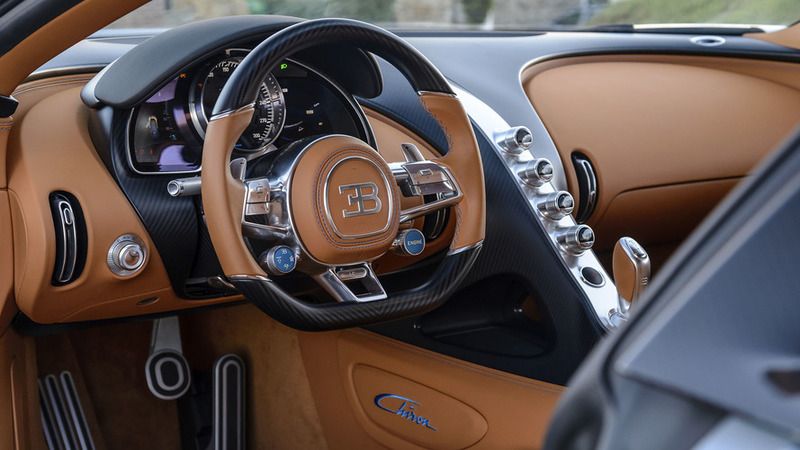
The Chiron has five different driving modes, which Bugatti calls “adaptive chassis”: Lift, Auto, Autobahn, Handling and Top Speed. The first four of these drive modes can be activated via the steering wheel, but the last one has a special. It is activated with the key.
To activate these modes, adjustments such as chassis height adjustment, electronically controlled shock absorbers, aerodynamic control system and stability and brake control system are carried out. In “Lift” mode, the suspensions rise for convenience when the car is loaded onto a tow truck. The “Auto” mode is activated at speeds above 50 km/h and actively adjusts the ride height. At speeds above 180 km/h, the “Autobahn” mode is activated and the shock absorbers are automatically adjusted to provide comfort and stable handling for high-speed driving on the highway. In the “Handling” mode, the shock absorbers and the steering wheel are adjusted according to the turns. There is also a “Top Speed” mode. This mode can be activated with a special key and allows the car to accelerate to the maximum speed of 420 km/h.
Chassis
The Chiron’s brakes are 20mm larger and 2mm thicker than those on the Veyron, allowing for greater heat dissipation. It is also lighter and tightened with new brake calipers with titanium pistons. The front calipers have eight pistons, while the rear calipers have six. Bugatti says the pistons of each caliper are different sizes to ensure even brake distribution over the brake pad.
Alongside the new brakes, the Chiron has a new electric steering systemw, revised front and rear axles and new chassis bushings; All of this, in Bugatti’s words, to provide an ideal response to driver intervention”.
Tires
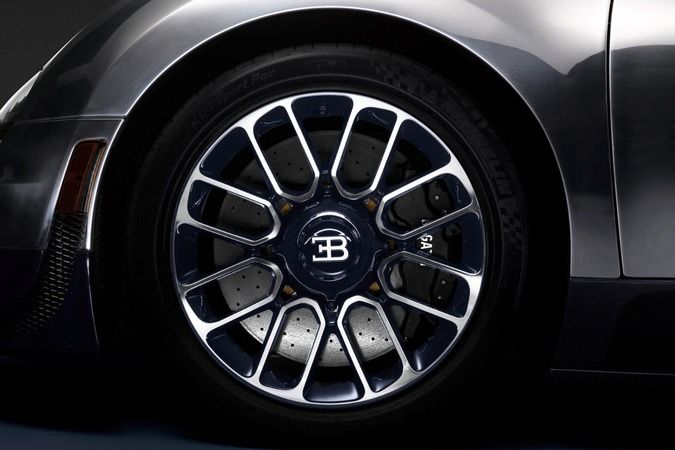
Like the Veyron, the Chiron’s tires were developed in conjunction with Michelin. Each wheel is designed to withstand 5,000 Nm of torque and exposure to a centrifugal force of 3,800 times the force of gravity per gram of rubber.
Tires 285/30 R20 at the front and 355/25 R21 at the rear are simpler and cheaper to install than the tires on the Veyron. That’s a good thing, because replacing the Veyron’s tires costs $40,000.
Aerodynamics and Cooling System
Aerodynamics and engine cooling are intrinsically linked. Radiators need airflow to reject the heat generated by the powertrain, but airflow entering the radiators causes friction, known as friction from cooling.
When designing a car whose goal is to reach top speeds, keeping the engine cool while minimizing cooling friction can be a daunting task. Bugatti says most of its 1,500 hp engines can generate more than 3,000 hp of heat recycling, which must be dissipated by the heat exchanger.
To meet this need, the Chiron has a water pump that pumps about 200 gallons per minute with a main radiator and two auxiliary radiators. For intercooling, a 12-liter low-temperature cooling cycle is available. Chiron has 10 radiators in total, including three engine oil coolers, transmission oil cooler, hydraulic oil cooler and rear differential cooler.
A typical high-performance track-oriented car like the GT350R may have four or five heat exchangers: a radiator for the engine, a transmission cooler, perhaps an auxiliary oil cooler, an intercooler and/or a low temperature radiator for the turbo, and perhaps one for the engine. another auxiliary heat exchanger.
Hybrid cars need more heat exchangers for the battery and other electronic components, but until now a car with 10 radiators is unheard of. Except for the Veyron.
Despite all these heat exchangers, the Chiron can stay cool even with its low underside and small low coefficient. Because after passing through a heat exchanger, the friction caused by cooling can be minimized with the smart channel that throws the air out and circulates it around the car.
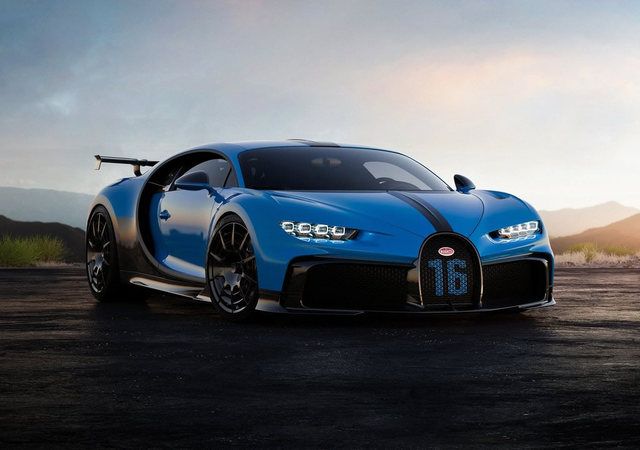
Bugatti lists the main aerodynamic factors as follows: the air curtain, the aerodynamic front splitter, the front air intakes for cooling the brakes, the water and air [heat exchangers], the air intakes for the oil cooler and the engine air intakes on the sides, as well as the continuous trailing edge at the rear of the vehicle.
Besides these passive aerodynamics, the Chiron also has hydraulically controlled active aerodynamics; Active air brake at the rear for braking and stability, with a rear diffuser blade for reduced drag and better brake cooling. This rear air brake spoiler can be positioned in four main positions but automatically adapts its angle and level to the driving conditions.
In addition, the variable ride height also reduces the vehicle’s drag, so the Chiron’s drag aerodynamics are constantly changing. Of course, some of the Chiron’s technologies are very similar to its predecessor and are slightly heavier than it. But the question is, can the Chiron break all the Veyron’s speed records without the speed limiter and development time?